If a player is batting in the final of a T20 World Cup, the pressure of performing would be immense. But not everyone feels that pressure.
But what if you are a batter who is already under a lot of pressure, not performing at the biggest stage? India made their choice clear when Abhishek Sharma and Sanju Samson started the Indian innings in the final with the same mindset and intensity that they have been known for.
In the third over, Abhishek Sharma danced down the pitch to the first ball of pace he faced in the game. In a high-stakes game like this, beginning cautiously would have been easy to justify for batters.
In this tournament, Abhishek has not been in good form. He was often a victim of offspin. Slower balls from offspinners had also troubled him. He was not in the rhythm that makes him the most destructive T20 batter in the world.
But he didn’t change the way he played. He stepped out anyway to pace bowling. He couldn’t connect with the next ball from Duffy when the ball was pushed slightly wide. However, that didn’t matter as Abhishek made up his mind to charge at the ball no matter what.
On the biggest night of his professional life, he was not suddenly changing the way he played. With that choice, he played some extraordinary shots that will be remembered for a long time.
Sharma, along with Samson, ended up making 92 runs in the 6 overs powerplay. It was the highest score ever recorded in that phase of the tournament. After that, the Indian batter didn’t slow down even when Abhishek got out just after his fifty.
Gautam Gambhir, the head coach of India, explained the team’s mantra since he and Suryakumar began working together. “The most important thing in this T20 format was that we didn’t want to be afraid of losing.”
“Because if you are afraid of losing, you never win. I always believe that high risk, high reward is very important in this format. Because many times it happens that you play in a conservative way. I would have been happier if we had been out at 110-120. But our target was always to make 250 runs; we didn’t want to play the 160-180 runs cricket. I think for too long, we played cricket with 160-170 runs.”
This idea may look simple, but not easy to execute. Gambhir further said, “My simple philosophy with Surya has always been that milestones don’t matter. It’s the trophies that matter. For too long in Indian cricket, we’ve spoken about milestones. And I hope, till I’m there, we’re not going to talk about milestones.”
“The only thing we spoke about was how we can give ourselves the best chance to win this World Cup. And the best chance to give ourselves to win this World Cup was how we react when someone like a batter is close to a hundred. If someone is batting on 94, does he have the courage to go and get a hundred next ball, rather than thinking about getting 100 for three or four balls?… Because those 10 runs and 20 runs are the difference between winning and losing the World Cup.”
Abhishek’s half-century came from 18 deliveries. It was not his most confident and cleanest half-century in T20 cricket. He edged a few balls, but the intent of every shot was on point. On the delivery, he got out; the intent was there for that as well. The delivery from Rachin Ravindra was wide enough for him to leave, but he still reached for it.
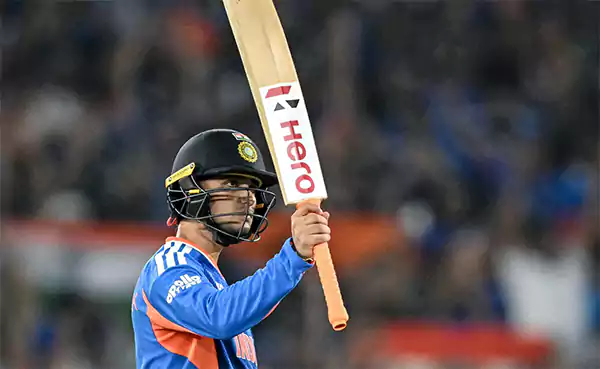
Even after his departure, the rhythm of the Indian innings did not change. Ishan Kishan also played fearless cricket with the intent to hit long shots. With this kind of batting, India made 255 runs in 20 overs. This score was more than enough for New Zealand even if they were batting second.