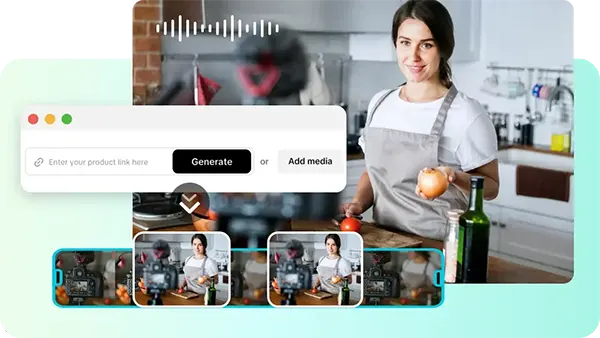
A single video idea will rarely work for all audiences. Each viewer will be interested in different languages, platforms, references, pacing, and benefits. An ad for a product might need to be different for people who live in the area versus those who live abroad, and a brief social video might need to be created under a different time constraint than an educational video. Pippit assists creators in transforming concepts into finished, high-quality visual content by focusing on the audience. Careful planning can be used to generate multiple video iterations that are relevant, consistent, and effective for one central idea.
First, determine the target audience and what is important to them. Segment audiences according to language, platform, location, age, interests, or content purpose. A younger social audience might like fast cuts and eye-catching starts, whereas professional viewers might require more explanations and context. Determine if a unique scene, presentation, or complete variation is needed for each group. Maintain one central message, then alter the audience-specific information. This allows for no unnecessary changes and helps to secure the campaign’s primary purpose. Pippit AI video generator is more helpful if the viewer, desired response, and publishing destination are clear in the brief. A precise audience profile also determines the visuals, words, timing, and call to action.
Pippit’s SeedAudio 1.5 can be used to tweak the soundscape of a video for various audiences, without compromising on the creative direction. It can receive audio, video, or audio and video as input and output dialogue, ambience, sound effects, and music. Timestamp is used to indicate when important dialog or, effects, or musical cues should occur. Using reference voices can also help to ensure consistency of speakers across changes in audience. Creators can create or tweak voiceovers and other audio components to ensure they are in the correct language, at the right speed, and with the appropriate tone and emotion for each localized version, while maintaining the essence of the campaign and visual style.
Key Audience Adaptation Elements
Step 1: Shape Content for Different Viewers
Step 2: Adapt the Video for Your Audience
Step 3: Refine and Export the Final Version
Seeworld is a more general 3D world-model approach, where the focus is on environments, spatial relationships, and viewpoints when creating videos for audiences. This idea can be used for more organized creative planning, taking into account the products, characters, objects, and backgrounds for the same scene. Creators can tweak settings, cultural nuances, or visual style to suit their target demographic while keeping spatial composition and essential brand elements intact. Pippit’s 3D Director Studio provides a productive workflow to experiment with similar ideas in 3D scene planning, camera placement, and visual references. This way, you can ensure that related video variations stay together, while enabling audience-specific alterations to be made.
Text-to-video is best suited to audience members who require a much different visual idea. A new location or storyline, character action, or way of presenting can be defined in a written brief. If there is already an established product, character, package, or branded asset that needs to be recognizable, then image-to-video is a better choice for continuity. Include an appropriate picture and write about the action, setting, camera angle, and tone. The model is able to convert the still image to a moving scene, while maintaining important visual cues. Use text when the concept comes from imagination. When identity, accuracy, and/or brand continuity is most important, use an image.
Before publishing a video, check out all the videos generated. Review the sequence and see if it conveys the message effectively and naturally. Check product look, placement of objects, consistency of characters, moves, lighting, and background details. Ensure that subtitles, translations, and localized words are appropriate for the audience. Look for unusual movements, spelling or word usage errors, unrealistic interactions, or distracting visual shifts. Finalize captions, text, crop, colors, effects, and background adjustments using Pippit’s editing tools. Revitalize low-quality ideas that are unable to be improved by editing. Every translation should be purposeful, correct, easy to read, and appropriate to the publication.
Consistency and flexibility are effective when it comes to video creation for the audience. Adapting one idea effectively through structured prompts, useful references, language planning, pacing, and format choices. Pippit allows for generation, editing, variation, and export within a practical creative workflow. Keep products, characters, and campaign identity recognizable between versions. Make only those changes to the presentation where there is a real need for the audience. This equilibrium results in much better communication, increased relevance, and more effective content creation.